The Stylesmyths: Vintage Fashion Reportage On Broadway
From vintage Playbills to politics; resistance in brocade and bourbon.
You can scroll the shelf using ← and → keys
You can scroll the shelf using ← and → keys
From Delta Heat to Digital Haze: Mendacity’s Grip on American Life
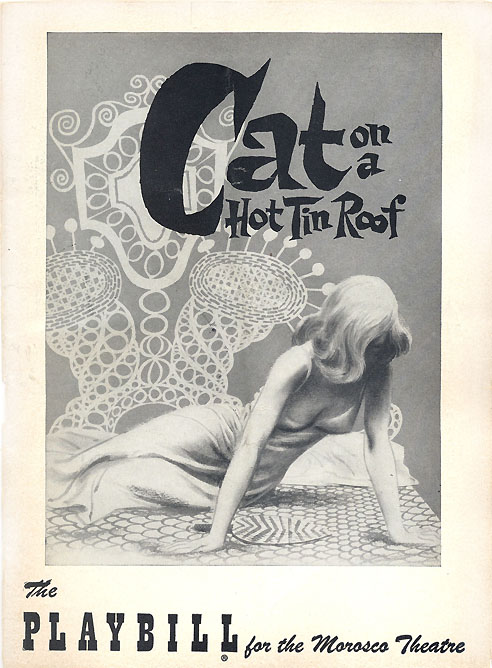
In a time when truth and illusion are once again battling for control of the American mind, Tennessee Williams’s Cat on a Hot Tin Roof feels less like a relic and more like a warning.
I don’t think it was a coincidence that as my orange tabby slept curled up in the corner chair, my vintage Playbill for Cat on a Hot Tin Roof spontaneously spilled across my desk — emerging from a black hole of bills, letters, and papers piled high. These last few months, I made a mental note to sort through my collection and select one play to write about for my next blog entry. “Cat” is one of my earliest Playbills, dated 1956, and as the Fates would have it, a perfect choice.
A play about the idea of tolerance couldn’t be more in step with the times. This play, written at the height of McCarthyism and The Cold War, illustrates how America paid for its post-war affluence with a national anxiety fueled by the nuclear arms race and politically generated fear. We fomented a fever pitch compulsion to maintain appearances of normalcy and conformity at all costs, regardless of the messy underbelly. Fast-forward and substitute ingredients of postmodern conservatism, civil unrest, home-grown terrorism, suspicion, and conspiracy theories. Shake and stir with the zeal of conviction fueled by the media and blogosphere, and you pour a similarly potent cocktail.
History may not repeat, but it sure can rhyme.
Today, as a renewed chill settles over American media and culture, the themes of truth, repression, and moral hypocrisy that Tennessee Williams explored are once again vulnerable to censorship and distortion.
It is no surprise that a 2013 Broadway revival of “Cat” starring Gen Y bombshell Scarlett Johansson as Margaret and co-star Benjamin Walker as Brick was well received by audiences and critics alike. A 2024 production featured a sinuous performance by Daisy Edgar-Jones portraying Maggie in London’s West End at the Almeida Theatre. Directed by Rebecca Frecknall, the revival used a minimalist set and a sharper emotional focus to underline the play’s timeless tensions.
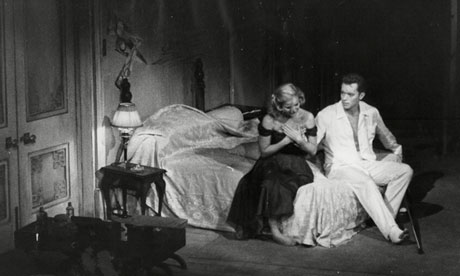
Tennessee Williams’ play, Cat on a Hot Tin Roof, premiered at The Morosco Theatre on March 4, 1955. It was one of Williams’s best-known works and his personal favorite. The play won the Pulitzer Prize for Drama that year and ran nearly 700 performances. A Southern Gothic morality tale that unfolds in the steaming Mississippi Delta, Cat on a Hot Tin Roof presents several recurring themes that continue to define America six decades forward. Need evidence? Tune in today and you’ll be bombarded not just by CNN and FOX, but by a host of independent journalists, Substack newsletters, podcasts, YouTube commentators, and influencer-driven media. Stories about truth versus illusion, out-sized greed, superficiality, lying, sexual repression, and death in every imaginable flavor and form. Add a few egg whites and a pinch of cream of tartar, and you have today’s national obsession whipped into a froth that’s as unstable as it is theatrical.
Set in the plantation home of Big Daddy Pollitt, a wealthy cotton tycoon, the play examines relationships among Big Daddy’s family members, primarily between his son Brick and Maggie the “Cat”, Brick’s sexually deprived wife. The original Broadway production was directed by Elia Kazan. It starred Barbara Bel Geddes as Maggie, Ben Gazzara as Brick, Burl Ives as Big Daddy, Mildred Dunnock as Big Mama, Pat Hingle as Gooper, and Madeleine Sherwood as Mae. Bel Geddes was the only cast member nominated for a Tony Award, and Kazan was nominated for Best Director of a Play.
McCarthyism and the civil rights movement directly impacted one of the play’s stars. Madeleine Sherwood (Mae) was blacklisted during the McCarthy era. During the Civil Rights Movement, she met and worked with Martin Luther King, Jr., and moved South to join CORE (Congress on Racial Equality). She was arrested during a Freedom Walk, jailed, and sentenced to six months’ hard labor for “Endangering the Customs and Mores of the People of Alabama”. Her lawyer, Fred Grey, was the first African-American lawyer to represent a white woman south of the Mason–Dixon Line. During this period, she lost most of her sense of hearing. She passed away in 2016, but before her death, she lived in Quebec, Canada, and was an active member of the Society of Friends (Quaker).
In 1958, MGM Studios adapted the play as a motion picture, starring Elizabeth Taylor and Paul Newman as Maggie and Brick.
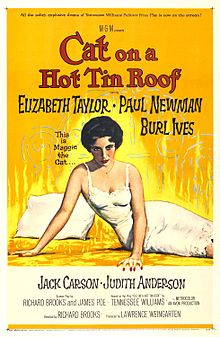
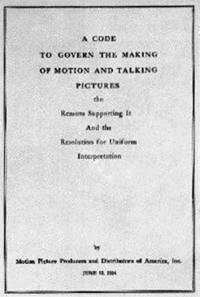
To adhere to the standards of the notorious Hays Code that oversaw film and television production during that era, the film version downplayed Brick and Skipper’s relationship. It diminished the original play’s critique of homophobia and sexism. Tennessee Williams reportedly was unhappy with the diluted screenplay, as were the film’s stars.
Central to the story’s theme is the relationship between Maggie “the Cat” and her detached, closeted, alcoholic husband, Brick. The tension in their marriage is ascribed to Brick’s close, possibly romantic friendship with his pro football friend Skipper. This relationship appears to be the source of Brick’s sorrow and the cause of his alcoholism. We eventually discover the hidden truth: Skipper confessed his feelings to Brick and was rejected. In despair, he committed suicide, leaving Brick steeped in self-loathing and guilt.
Ironically, patriarch Big Daddy (whom the family continually tries to deceive) finally speaks the truth. He rightly states that Brick’s disgust with mendacity is, in essence, disgust with himself for rejecting Skipper before his suicide. A repeating phrase in the play, “Wouldn’t it be funny if that was true?” is, in fact, the play’s closing line. This ambiguous sentiment questioning the gap between appearances and reality resonates even more powerfully today, as debates over truth, identity, and personal freedom return to the center of American life. Williams’s vision of mendacity, once seen as a relic of a more repressive past, feels alarmingly current.
As Tennessee Williams himself stated, he wrote Cat on a Hot Tin Roof as a rebuke to America’s illusion that sexuality is fixed and possessions can shield us from death. In 2013, when I first penned this blog, it seemed we were finally ready to hear him. Now, that hope feels more fragile. As suspicion rises, LGBTQ lives are once again under threat, and surveillance seeps deeper into daily life, Williams’s warning against mendacity grows harder to ignore. Yet even amid disinformation and rancor, the message he offered — a call for honesty, compassion, and acceptance — remains. Fragile, perhaps, but not extinguished. One can still hope. It is, after all, eternal.
Let’s lighten up a bit and pivot smartly to cocktail hour, shall we?
That’s right. Settle down gently into your worn mohair theater seat while sipping our themed cocktail for the evening, The Southern Peach. This delicious summery blend of bourbon, Southern Comfort, peach schnapps, lemon, and a touch of sugar is a delight. Go ahead and slip a sliver of peach slice over the edge of the glass to finish off this tasty concoction. Lovely! Oh, and I do love your sparkly rhinestone earrings. Are they vintage? They light up your eyes!
Scene: A bed-sitting room and section of the gallery of a plantation home in the Mississippi Delta. An evening in summer…
__________________________________________________________________
ABOUT TO THE LADIES
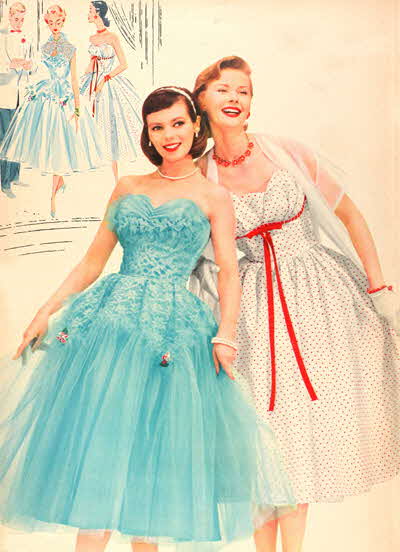
This Playbill’s fashion column, To The Ladies, was penned by mysterious fashion writer B. B., whose complete identity is known only to herself, and perhaps her Publisher. In 1956, fashion houses and manufacturers introduced a romantic revival and orientalist theme into their lines. Style moved away from stark simplicity to a more individualized mood. While there was a change in silhouette, from cut to drape, the major evolution was the introduction of softly clinging and floaty sheer fabrics. This was the year of the luxurious textile, with chiffon, cut velvets, lace, charmeuse satin, crepe, silk georgette, and silk tulle with elaborate embroideries incorporated into day and eveningwear. Embellishments such as hand-stitched rose appliques, sparkling white rhinestones, floral motifs, feathers, and furs were evident on capes, hats, dress bodices, and accessories. This brings us to this fashion report on the “Little Fur of many uses”. Fur was used as an embellishment on collars, cuffs, and hats, and became an important part of the story about a new luxury mood. This relatively affordable small mink stole was in reach for many consumers and merchandised in several fashion shades. The little fur stole quickly found its place in many well-dressed women’s closets. Usually, you would find the stole satin-lined and embroidered with the initials or name of the wearer. My great Aunt Dotty, aka D. G., a woman of enviable style and taste (and a passionate theatre-goer and collector of these Playbills), passed along her dark ranch mink stole wrap to me. Although I eschew new fur, I still cherish my vintage stole and occasionally enjoy enveloping myself in its luxurious softness on chilly nights. It keeps the memory of my beloved Great Aunt close to me.
You can still purchase a good selection of these vintage stoles on eBay, local auction houses, and antique markets. While tastes and social mores have changed since the mid-1950s, and many see fur today as an unappealing choice, our desire for luxury, refinement, and self-expression is eternal.
_____________________________________________________________________
TO THE LADIES
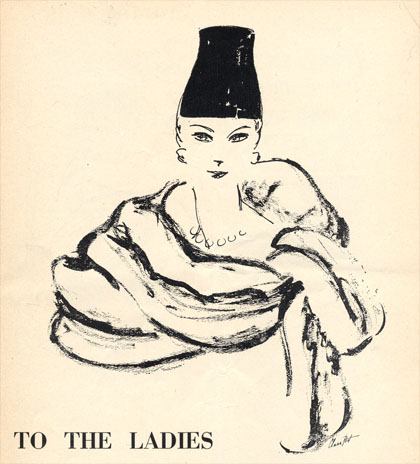
Furriers, currently the envy of the rest of the fashion industry because the weather would seem to be all on their side this reluctant spring, actually are less lucky than smart.
Their own little invention, the Little Fur of many uses and endless usefulness, rides above the weather in any season and has made fur-mindedness a year-round thing. The same small fur that’s cozy on chilly summer evenings is just right for mild ones in winter; it extends the season of spring and fall suits; it is an angel of adaptability to time, place and occasion and is the parfait gentil traveling companion no matter where you go, or when.
With all this, it’s a rare small fur nowadays that ever sees the inside of a storage closet.
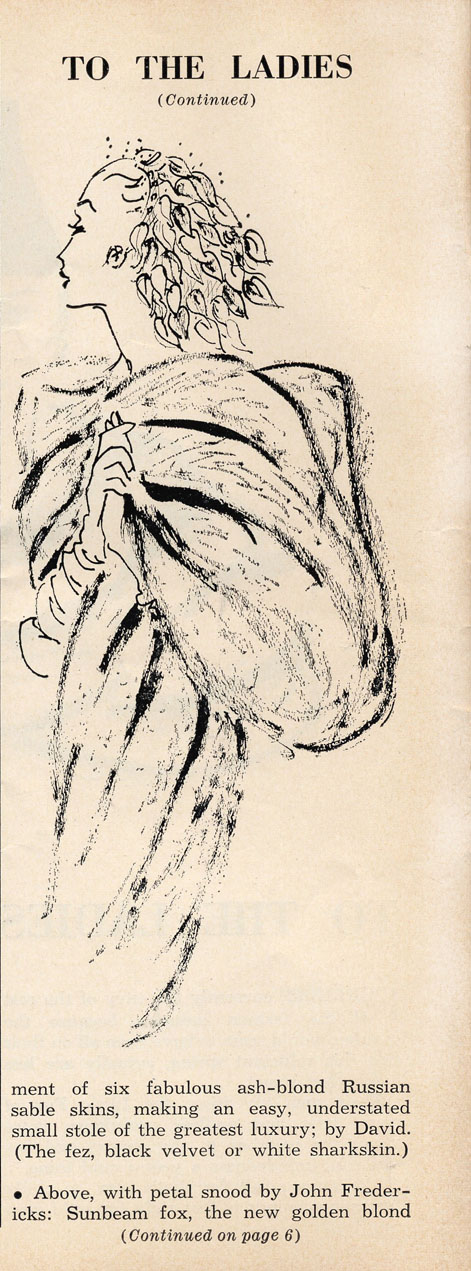
• Our small furs: Shown with the about-to-become-famous fez: Assortment of six fabulous ash-blond Russian sable skins, making an easy, understated small stole of the greatest luxury; by David. (The fez, black velvet or white sharkskin.)
• Above, with petal snood by John Fredericks: Sunbeam fox, the new golden blonde shade in a smashing stole by Leo Ritter, a small fur only in the categorical sense. (The petal headdress, in pink shading to rose, has a scattering of rhinestones and converts to a beret, completely covering the hair.)
With no hat at all, although it takes kindly to hats when worn by daylight—the pocketed shoulder throw in pastel mink, one end to pull through a slot in the other; from Stein and Blaine. Below.
It’s no coincidence that all three pieces are of the stole order—to our minds the most useful and adaptable of the whole useful, adaptable small-fur clan.
–B. B.
___________________________________________________________________
Cut, Drape, and Valuation
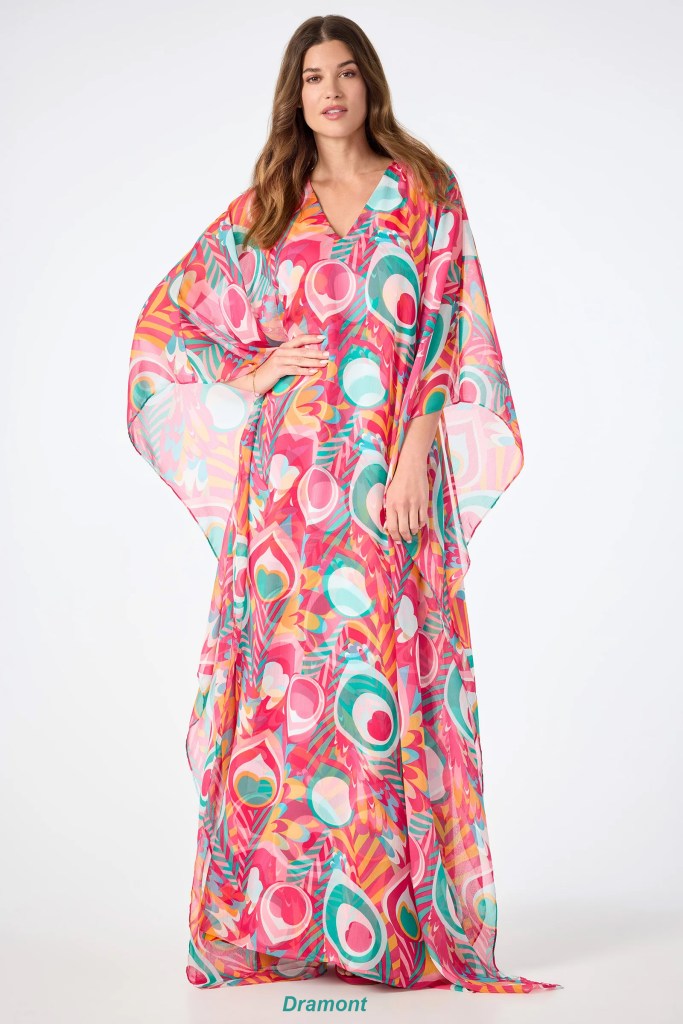
I have always wondered why the category of loungewear has vanished chiefly from fashion’s lexicon. Excluding the ubiquitous basic yoga pants and gaudy graphic tank tee (a look, incidentally, that is perfect for Miss Schlep-along), the concept of donning a particular garment for home entertaining or simply to welcome the twilight hour in style is gone. Enter the summery, pool-side appearance of the fabulous, forgiving, and floating kaftan from an Arabian night. Some popular brands include Frances Valentine, Hester Bly, Teggie French, and La Vie. Here, we feature Trina Turk’s classic interpretation, with prices ranging from $200 to $500.
________________________________________________________________
Is the sun dipping down? It must be Golden Hour somewhere! Let’s begin!
The Southern Peach
Taken from Sexy City Cocktails by Sheree Bykofsky and Megan Buckley
2 ounces bourbon
1 ounce Southern Comfort
1/2 ounce peach schnapps
1/2 ounce fresh lemon juice
1/2 teaspoon sugar
A dash of club soda
1 fresh peach slice, for garnish
Swirl the bourbon, Southern Comfort, peach schnapps, lemon juice, and sugar into your cocktail shaker over ice, and shake well. (Make sure the sugar is dissolved.) Pour it into a Collins glass, half full of fresh ice, and top it with club soda. Then, slip a willing peach slice over the edge of the glass.
Southern Comfort, in case you were wondering, is a bourbon infused with other flavors, such as peach and orange. Although the recipe is top secret, it was first conjured by a Louisiana bartender in 1870. Today, it is produced in Kentucky, the birthplace of other great bourbons.
Cheers, and take your sweet time. Bless your heart!

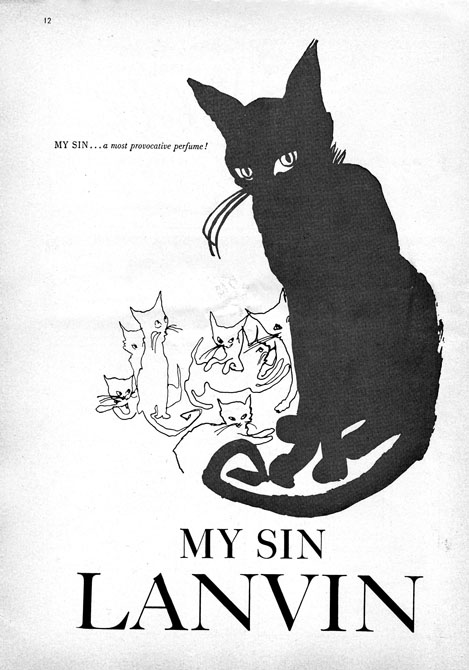
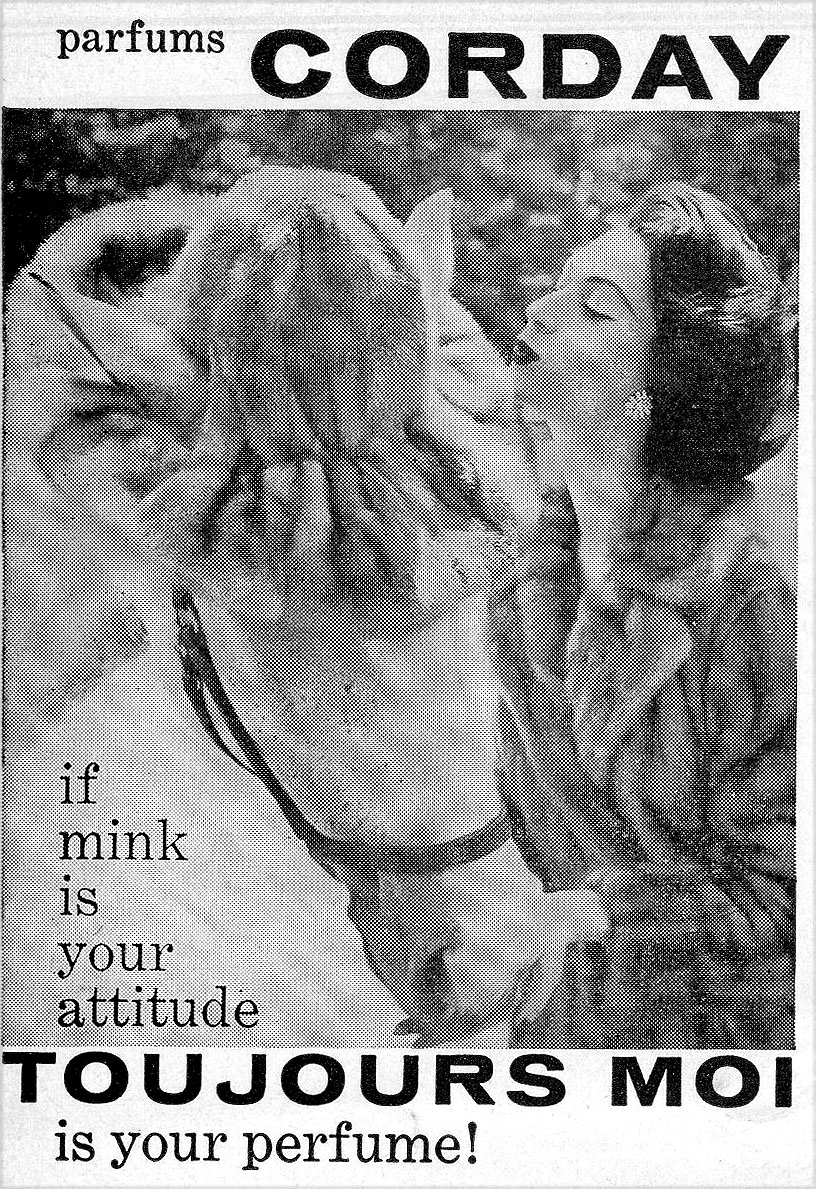
Come visit me on Pinterest for additional vintage advertising images!
Postscript: Twelve years after I first reflected on Cat on a Hot Tin Roof, the themes of mendacity, illusion, and moral reckoning feel more vivid — and more urgent — than ever. Time, it seems, has not erased the struggle for truth, only deepened its importance.

Love the review and the tie ins –past and present.

Thank you Dinine, I am glad you enjoyed it! Have a great weekend and make yourself a Southern Peach! xo

 The Stylesmyths: Vintage Fashion Reportage On Broadway